
The Best Fluffy Pancakes recipe you will fall in love with. Full of tips and tricks to help you make the best pancakes.


Tested at Receptarna, May 2026
Photos: Receptarna, from our kitchen
Potato bread is something special in our house: very soft and light, it does not crumble when you slice it and it stays fresh for several days. Even frozen, once thawed it is just like freshly baked. We bake it when there is mashed or diced potato left over from lunch, though we often boil potatoes especially for it.
We usually make the dough by feel, but this time we baked several loaves weighing every ingredient, and the recipe is all the better for it.
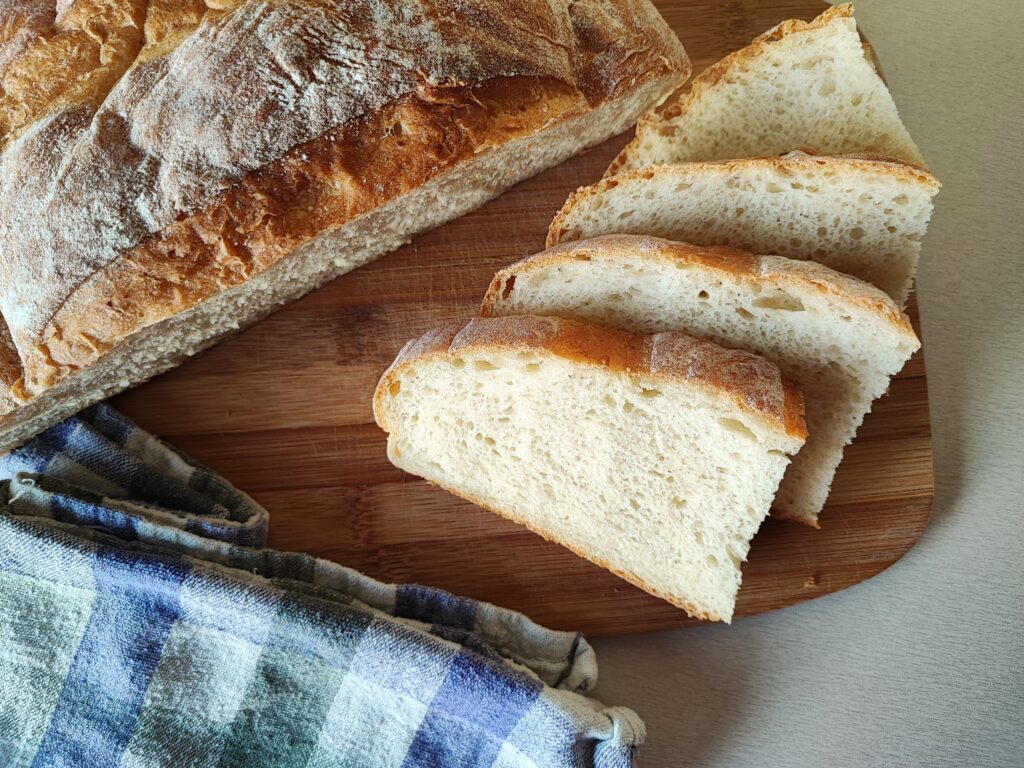
Potato bread
Description
A very soft, light potato bread that does not crumble when sliced and stays fresh for several days. It is a good way to use up leftover mashed potato, and after freezing and thawing it is just like freshly baked.Ingredients



Method
-
Peel, wash and cut the potatoes into smallish pieces; you need 300 g of peeled potato. Put them in a pan with just enough water to cover, bring to the boil and simmer gently for 15–20 minutes, depending on the variety.
-
Tip the cooked potatoes into a colander and let them drain well and cool to at least lukewarm, as potato that is too hot would kill the yeast. Mash the cooled potato thoroughly with a masher, as if making mash. If you are using leftover mashed potato, simply weigh out 300 g.
-
Add 530 g plain flour, 250 ml lukewarm water, 50 ml oil, 10 g salt (or salt to taste), 3–4 g sugar and the packet of dried yeast to the mashed potato. Instead of dried yeast you can use half a block of fresh yeast (21 g); first make a starter with it and a little lukewarm water and sugar.
-
Knead everything well, most easily with a stand mixer. Knead the dough for a good 20 minutes, no less, though a minute or so longer is fine. The dough is fairly wet, but it comes away cleanly from the sides of the bowl.
-
Cover the dough and leave it to rise until doubled in size. Rising time varies, so watch the dough rather than the clock; it usually takes 30–60 minutes, depending on how active the yeast is.
-
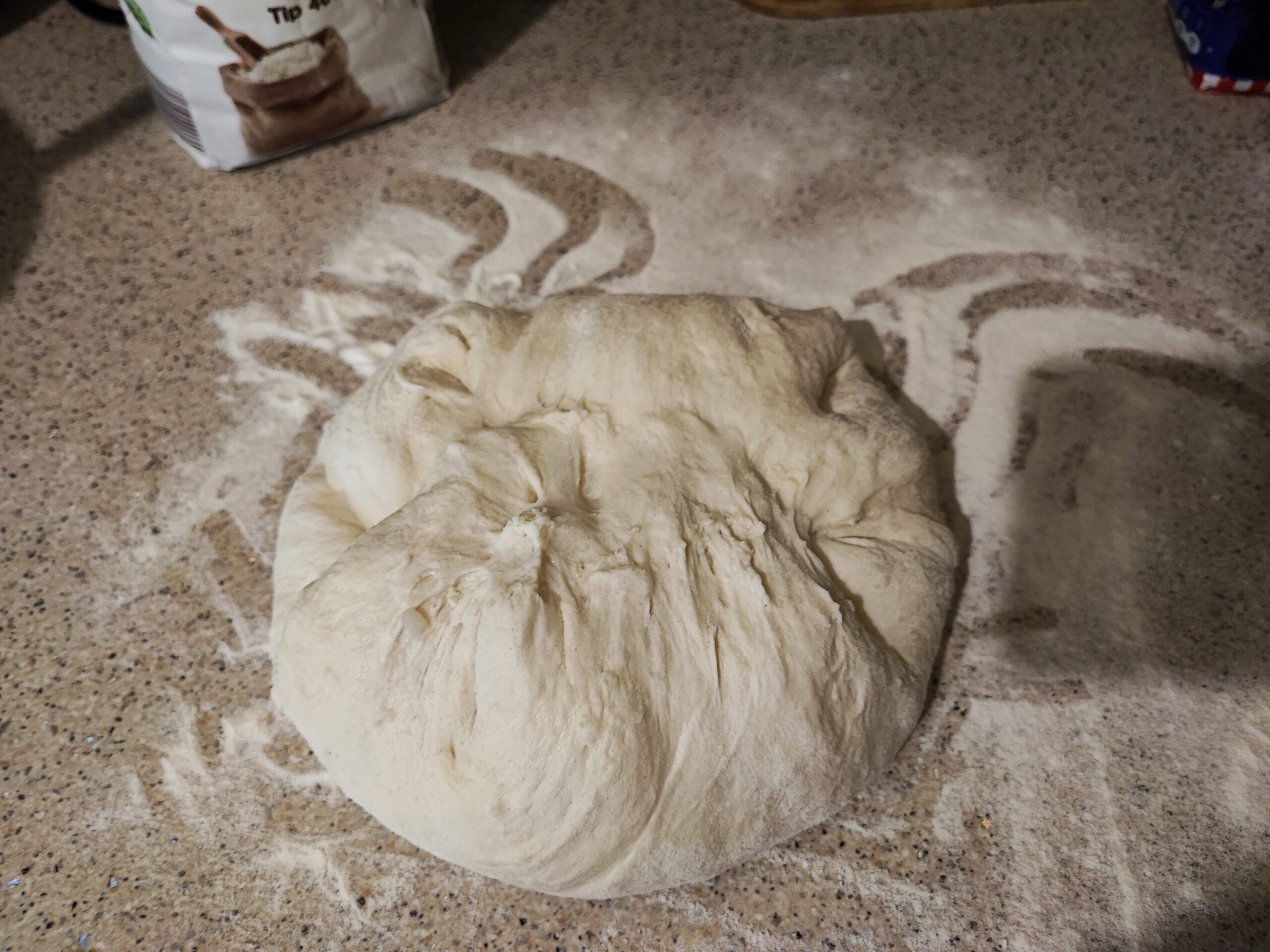
Flour the work surface generously (coarse flour is best, but plain flour also works), tip the risen dough onto it and, with floured hands, quickly shape a loaf: first stretch the dough a little, then lift the outer edges and fold them in towards the middle. Turn the loaf over and shape and smooth it a little more.
-
If you have a proving basket, place the shaped loaf in the floured basket top side down, cover with a tea towel and leave to rise for another 15–20 minutes. If you do not have a basket, put the loaf on a baking tray lined with baking paper, cover it and leave it to rise in the same way.
-
Meanwhile, heat the oven to 170 °C fan (190 °C without fan).
-
Carefully turn the risen loaf out of the basket onto a baking tray lined with baking paper and score it as you like. Bake for 40–45 minutes at 170 °C (fan); adjust the baking time to suit your oven.
-
Wrap the baked bread in a clean tea towel (not one washed with fabric softener) and set it on a wire rack to cool completely.
Note
- To check whether the bread is done, tap the crust: if it sounds hollow, it is baked. This works for any type and shape of bread.
- If you like a hard crust, do not wrap the bread in a tea towel; let it cool uncovered on the wire rack.
- The potato must be cooled to at least lukewarm before use, otherwise it will kill the yeast.
- The bread freezes well; once thawed it is just like freshly baked.